 English
 български
 Deutsch
 Español
 Polski
 Русский
 Română
 Türkçe
 Українська


Poda Protected Area Near Burgas: Birdwatching Day Trip from Ravda
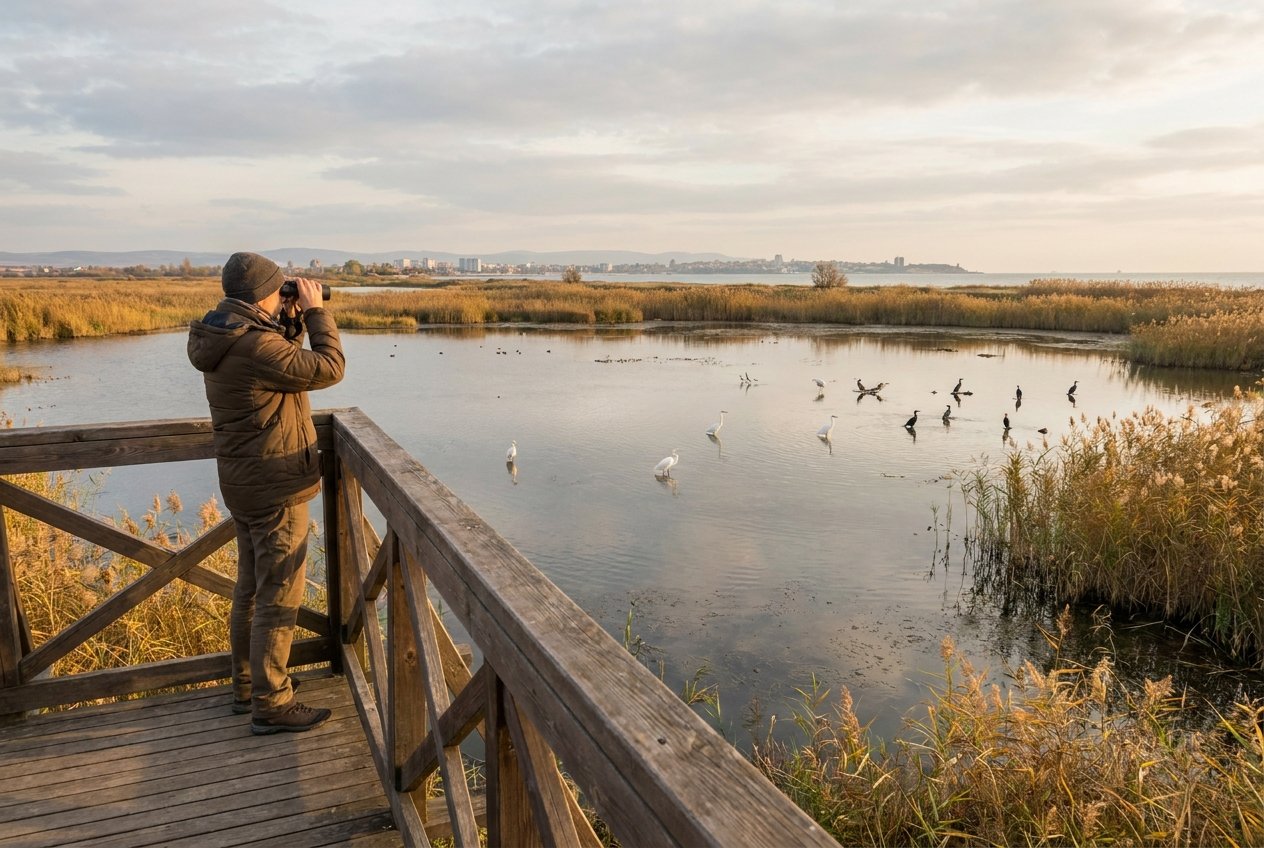
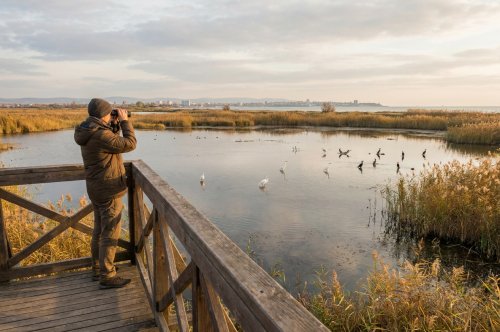
A Poda Protected Area visit is one of the best things to do near Ravda when the beach weather is gone. Poda is a small wetland on the edge of Burgas, run by the Bulgarian Society for the Protection of Birds (BSPB), where you can walk a short trail, climb an observation terrace and look through spotting scopes at birds that most holidaymakers never see. This guide explains what Poda is, what the official visitor page says about hours and prices, how to reach it from the Ravda and Nessebar side, and how to plan a realistic half-day around the autumn and winter schedule that applies since October.
What Poda is and why it is worth a half day
Poda sits at the southeastern end of Burgas, beside the main road to Sozopol, according to the BSPB visitor page. A 2021 BTA report describes it as a marshland about 4 km south of Burgas. It was declared a protected area by the Environment Ministry in 1989, was the first protected territory managed by a non-governmental organisation, and was added to the Ramsar List of Wetlands of International Importance in 2002 (BTA, 5 December 2021).
The numbers are what make it unusual. BSPB says more than 321 bird species have been recorded in an area of about one square kilometre. BTA's 2021 article gave 315 species for the same area, and a Visit Bulgaria page gives about 265, so treat the exact total as a moving figure and the general message as reliable: this is a very rich small site.
Poda is also the only place on the Bulgarian Black Sea coast with a mixed colony of Eurasian spoonbill, glossy ibis, pygmy cormorant and several heron species, according to BSPB. The reserve lies on the Via Pontica, one of Europe's major bird migration routes, so the calendar matters for what you see.
You do not need to be a birdwatcher. The site is compact, the visitor centre lends binoculars and scopes, and staff ornithologists help identify what you are looking at. If you are travelling with children, a short guided look through a scope is often more memorable than another museum.
Opening hours and ticket prices (check before you go)
BSPB publishes two schedules. Summer, April to September, is Monday to Sunday, 09:00 to 17:00. Winter, October to March, is Wednesday to Sunday, 09:30 to 16:00, and the centre is closed on Monday and Tuesday. Because today is 20 October 2026, the winter schedule applies now. That one detail can ruin a trip: a Monday or Tuesday visit in autumn means a closed door.
Other websites give different hours. The Visit Bulgaria page lists year-round opening with 09:00 to 19:00 in summer and 09:00 to 17:00 in winter, and the 2021 BTA article says daily 09:00 to 17:00. These sources are older or undated, so I would trust the operator's own page and confirm by phone before travelling. BSPB lists a mobile number, +359 878 252 722.
Admission listed on the BSPB page, with no date stated, is:
- Adults: €4
- Students: €2.50
- BSPB members: €2.50
- Children up to 6 accompanied by an adult: free (not for organised group visits)
- Talk 'n' Tour, a talk plus guided exhibition tour: €10.50
Photo hides are priced by number of photographers and time, and must be arranged in advance. BSPB also says overnight accommodation for up to two people can be requested in advance. Because the page does not show when prices were set, treat these as a guide and ask when you call.
How to get to Poda from Ravda, Nessebar and Burgas
I did not find a direct public transport line from Ravda to Poda in the sources used for this guide, so the practical plan is a two-step journey: reach Burgas, then continue to Poda. Buses and minibuses connect the Nessebar and Sunny Beach area with Burgas, but timetables change by season, so check the current schedule at your stop or with your host.
If you have a car, Poda is the simplest option. BSPB gives GPS coordinates for the car park, 42.442767 N, 27.469618 E, and explains that the car park is next to the road. Coming from Sozopol heading north, you pass under the Kraymorie and Malko Tarnovo overpass and the bus stop, and the car park is about 160 m further on. From Burgas, the page describes passing a fuel station, a canal bridge and another fuel station, turning right at the Malko Tarnovo and Kraymorie junction, using the overpass to turn back towards Burgas, and turning right about 160 m after the Border Police post. A navigation app set to the coordinates is easier than following those directions from memory.
By city bus, BSPB's directions are as follows: take bus No. 17 from the Yug Bus Station, near the Central Railway Station, to its final stop in Kraymorie. On the return trip, get off at the first stop, called Poda, then follow the path behind the stop, climb the hill by the new walkway, go straight for about 300 m and cross the old canal bridge. The wording suggests a roundabout routine, so ask the centre or the driver to confirm which stop to use, especially in winter when services may be thinner.
A taxi from Burgas is another option if you are two to four people, and it removes the guesswork. Agree on the return trip before you start, because a rural stop on the Sozopol road is not where you want to wait for a random car.
What you can see: autumn, winter and migration season
BSPB describes late summer as the best time for migration, when thousands of storks and raptors pass overhead on the Via Pontica. Visit Bulgaria names March, April, August and September as the best months for migratory birds. In other words, the peak passage is behind us by late October, but the site is not empty.
BSPB's summer list includes herons, cormorants, spoonbills, glossy ibises, terns, pelicans and birds of prey including the white-tailed eagle. The 2021 BTA report adds winter visitors such as Dalmatian pelicans, several swan species and greater flamingos, and reports 15 red-breasted geese, a globally threatened species, in the winter it described. That report is five years old, so do not promise yourself a particular species. Winter birding is real, but sightings vary from year to year and with the weather.
Beyond birds, BSPB mentions rare plants, reptiles and insects in the wetlands. BTA notes more than 200 plant species, over 160 insect species, the blotched snake and the Etruscan shrew. In autumn, the reeds, water and sky colours are the main show.
On site you will find an observation terrace, a visitor nature trail, photo hides, binoculars and spotting scopes, an exhibition about the protected area and the Burgas wetlands, and a shop with souvenirs, bird books and drinks, according to BSPB.
Planning your day: a realistic half-day plan
Start late morning. Winter opening is 09:30, but birds are often active in the early hours, so if you are serious about photography, arrange a hide in advance. Spend about two hours at Poda: the exhibition, the terrace, the trail and a chat with a staff member. Bring a windproof layer, because the wetland is open and the wind can feel colder than in Ravda.
Pack binoculars if you own a pair, though the centre lends equipment. Wear waterproof shoes, since paths near water can be muddy after rain. A thermos helps; the shop sells drinks, but do not rely on a full café.
After Poda you can combine the visit with other Burgas sights. Burgas is a good rainy-day base, with a sea garden and museums, and this city is covered separately in the Burgas day trip guide on this site. If you prefer a seaside walk, Sozopol lies further south on the same road, though in October and November many seasonal businesses there reduce their hours.
For families, a simple rule works: keep the visit short, assign a child to count species, and let staff point out one bird per visitor rather than trying to see everything. Photography enthusiasts should keep their distance from the birds; BSPB staff can explain where you may stand.
Honest limits: what to confirm before you travel
Several details in this guide come from one operator page without a date, and a few come from older reports. Prices, hours, bus numbers and bird counts can change. The bus directions in particular are complicated and are worth a quick phone check. Weather is the other limit. Heavy rain or strong wind can make a wetland trail unpleasant, and the best light is not guaranteed.
Also remember that Poda is a conservation site, not a theme park. Staying on the paths, keeping noise down and following staff instructions is the price of seeing the birds at all.
Frequently Asked Questions
Newsletter
Join our subscribers list to get the latest news, updates and special offers directly in your inbox