 English
 Bulgarian

Sunny Beach, Short-Term Rentals and a Longer Season: What Bulgaria's Ministers Said on the Black Sea Coast

Written 12 October 2026. Original news dates: 2–5 September 2026 (with background from 14 and 19 August 2026). We did not find a newer verified Black Sea tourism story within the past 72 hours, so this report covers the most important recent developments and states each date.
The Black Sea summer of 2026 is over, but the debate about how the coast should work is only getting started. In early September, two Bulgarian ministers travelled to Nessebar, met the tourism industry and announced plans that could change how holidays on this coast are sold, regulated and extended into the shoulder seasons. Burgas, meanwhile, is preparing to host the Eurovision Song Contest in May 2027. Here is what was said, and what is still unconfirmed.
What happened in Nessebar
On 4 September 2026, Tourism Minister Ilin Dimitrov spoke to reporters in Nessebar after a meeting with industry representatives, according to the Bulgarian News Agency (BTA). He announced a planned connectivity and promotion fund meant to attract more tourists and extend the season. BTA's report gave no amount, no funding source and no mechanism.
Dimitrov's argument was that air links come first. He said advertising without connectivity, "without more flights", is in his words practically ineffective, and that the change "will completely change the way the season operates". He added that September could be strong if the weather held, and that the season could stretch beyond September if enough events are organised.
The same day, Regional Development and Public Works Minister Ivan Shishkov spoke to journalists in Nessebar about Sunny Beach, which we cover below. A day later, on 5 September, BTA reported more detail from an interview that Dimitrov gave to bTV.
Sunny Beach: who owns the streets?
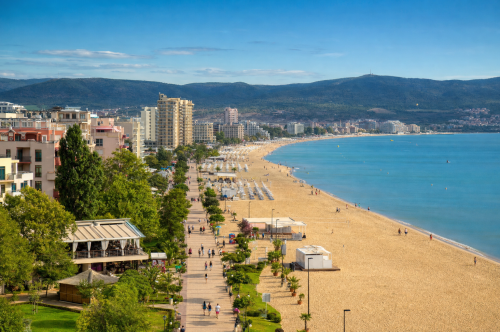
The most striking announcement concerned the resort's infrastructure. Shishkov said the infrastructure of Sunny Beach, currently managed by the company Sunny Beach AD, should move to two bodies: Nessebar Municipality would take over the resort's streets and alleys, and the Burgas water and sewerage utility would take over water and sewerage. The aim, he said, is for the assets to be run by the bodies legally responsible for them.
He said what has been happening for years is "completely unlawful" and must end. He rejected using public funds, and he called an earlier proposal, under which Nessebar Municipality would acquire the infrastructure for about BGN 75 million, unacceptable. He asked the company's shareholders to transfer the assets voluntarily. If no agreement is reached, he said, expropriation or legislative changes remain options. According to BTA, the proposal covers infrastructure only, and streets designated in the resort's detailed development plans would be separated from the company's other properties. No timeline was given.
Novinite, a Sofia-based news site, added that the state does not plan to shut down Sunny Beach AD, and that its goal is to place the infrastructure under the institutions legally responsible for it. It reported that the company would no longer operate the resort's many commercial pavilions, with local authorities regulating their use. Dimitrov said he opposed how the pavilions look, not the pavilions themselves.
Commission agents and short-term rentals
Novinite also reported Dimitrov's comment that more than 4,000 commission agents operate in Sunny Beach, a long-standing problem that needs more transparency. The mayor of Nessebar noted that tourist-tax revenue there is lower than in Varna, despite the area's large number of tourist beds.
Short-term rentals were a second major theme. Dimitrov said properties offering short-term accommodation will be included in the national tourism information system. His reasoning was fairness: hotels pay fees and taxes that short-term providers do not, even though both use the same infrastructure. In the bTV interview on 5 September, he said the ministry plans legislation to bring short-term rentals into the Unified Tourist Information System, linked to booking platforms, so that unregistered properties could not offer services through those platforms. He stressed the aim is to regulate and add transparency: "We are not fighting short-term accommodation."
If you rent out or book apartments on the coast, this is the part to watch. The plans were described as intentions, and the reports did not say when legislation would be introduced or what registration would involve.
Tourist tax and the German market
Dimitrov said half of tourism tax revenue is planned for promotion and air connectivity, with municipalities and local communities deciding how the money is spent, including on off-season festivals and events. A connectivity and promotion fund and a structure linking universities to tourism quality are under discussion. Novinite described the idea as allocating half of municipal tourist-tax revenue to air connectivity or tourism marketing.
The German market featured heavily. Dimitrov said that May and June were weaker, mainly because part of the German market was absent, after about 200,000 German air seats were lost following problems between two major market players. He said the shortfall was later largely offset, and that results for the season were expected to be close to last year's, within 1–2% either way.
For next season, he said about 150,000 new air seats for Germany have been agreed, with more expected, and that German arrivals could rise 25–30% over this year, bringing numbers closer to 2019 levels. (Novinite quoted a slightly different framing: more than 100,000 additional seats agreed, with an expectation of at least 150,000.) He noted that German tourists tend to arrive earlier, stay longer and travel mainly on charter flights, which require a minimum stay of seven days. These are forecasts and agreements, not completed results.
Prices: an assessment due in October
On prices, Dimitrov said increases on the coast worked well where they were reasonable, but that price gouging produced worse results. He said a fuller assessment is due in October. That makes this a story to follow in the coming weeks, because the findings may influence what hotels and restaurants charge next summer.
Airports: more than three million passengers
On 2 September, Novinite reported that Burgas and Varna airports together handled more than 3 million passengers since 1 January 2026. Burgas Airport reopened on 1 May after a runway rehabilitation project costing over €60 million, so it was closed for much of the early part of the year. The airports' operator, Fraport, spoke of "positive momentum", though it said annual traffic is still expected to remain below pre-pandemic levels. It cited high aviation fuel costs and a significant decline in the German market after a partnership between two airlines ended. Both airports added destinations and frequencies for the 2026 summer, though the report did not name them.
Eurovision 2027: Burgas in the spotlight
The biggest event on the coast's horizon is Eurovision. Burgas was officially announced on 13 August 2026 as host of the 2027 contest, after Bulgaria's singer Dara won the 2026 contest in Vienna. The semi-finals are scheduled for 11 and 13 May 2027 and the final for 15 May 2027, according to BTA.
On 14 August, Novinite reported that the contest will be held at Arena Burgas, a venue the city says can take about 13,000 to 15,000 people including standing spectators. Mayor Dimitar Nikolov said more than 155,000 beds are available across four municipalities around Burgas, and argued that this supply should keep prices down. BTA reported on 19 August that the Bulgarian Hotel and Restaurant Association urged the country to make the most of the opportunity. Its deputy chair, Veselin Nalbantov, estimated that a four-star room in Sunny Beach during the contest could cost up to 200–250 euros per day, while another board member, Georgi Trapkov, warned that sharp price rises could backfire. On 5 September, Dimitrov said preparations had made "huge progress" and called the event a chance to show the coast "as a world stage".
What it means for visitors and businesses
For visitors, the changes under discussion are mostly about trust and transparency. Registering short-term rentals and regulating commission agents could make bookings easier to verify, although none of this has yet been enacted. Prices are a live issue, and one industry estimate suggests Eurovision week could be expensive. Anyone planning to be on the coast in May 2027 should book early, and compare the quoted price estimates with what is actually offered.
For businesses, the signals are clear: better air links and events outside July and August are the government's stated priorities. Owners of small guesthouses and apartments should prepare for registration requirements. Large operators in Sunny Beach will be watching the infrastructure dispute closely.
What happens next
Several items have no deadline. Sunny Beach's infrastructure transfer has no timeline, and the shareholders' response has not been reported. The connectivity fund has no published budget. The short-term rental changes are described as planned legislation. The price assessment was due in October, and the Eurovision dates are fixed for May 2027. We will update this story when verified new information appears.
Plan your coast stay
Looking for accommodation or local businesses on the Black Sea coast? Browse the listings on RavdaBG.com.
Frequently Asked Questions
Newsletter
Join our subscribers list to get the latest news, updates and special offers directly in your inbox